
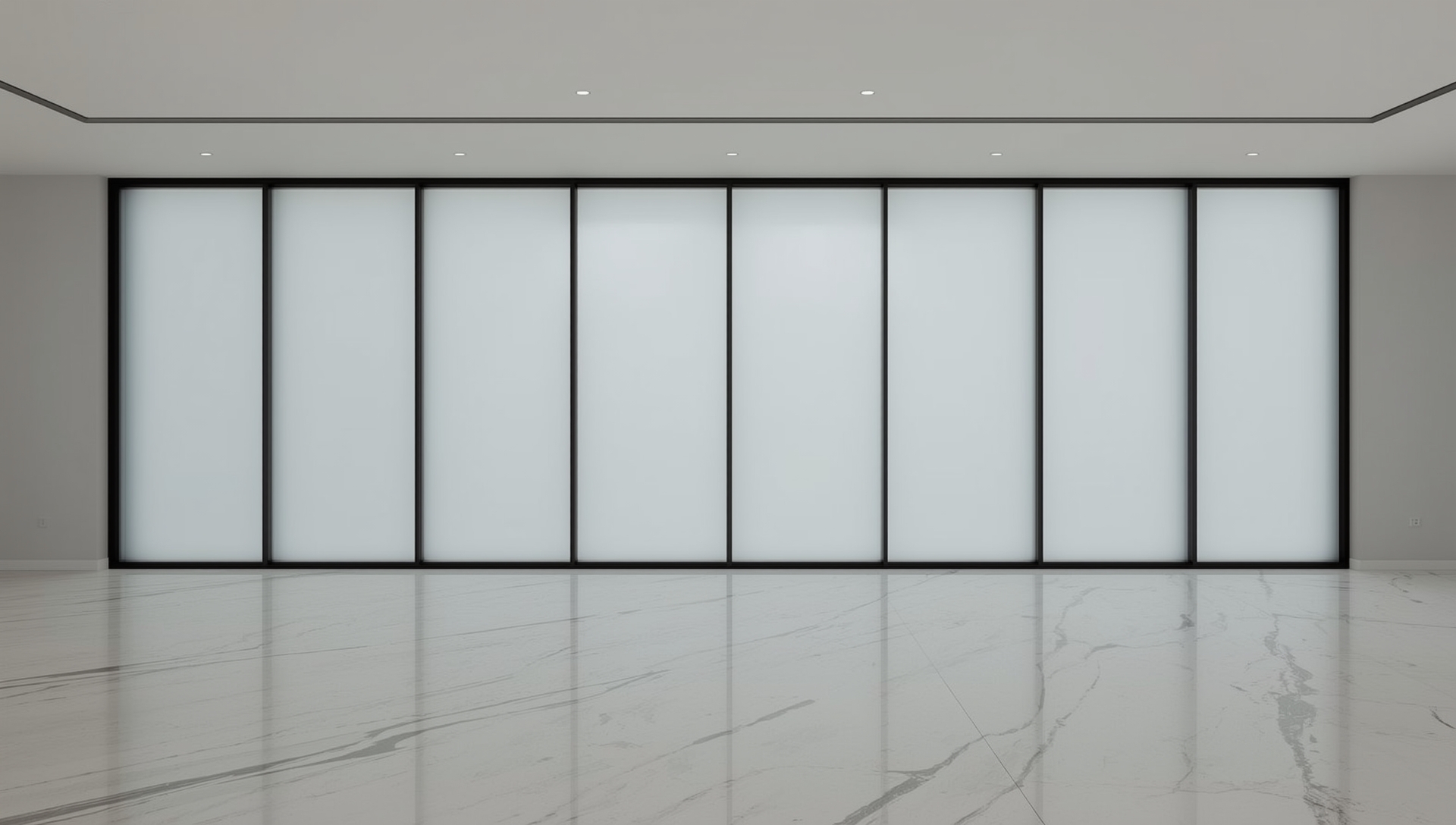
Smart film has become one of the most practical ways to add instant privacy to glass without replacing the glass itself. Also known as switchable privacy film, it can be applied directly to existing windows, doors, partitions, and other glass surfaces, allowing them to shift from transparent to frosted when powered. That retrofit flexibility is one of the main reasons smart film is now used in conference rooms, office partitions, healthcare settings, bathrooms, storefronts, and hospitality spaces.
Although the finished product looks sleek and effortless, the installation process is highly detailed. Smart film is not just a surface treatment. It is a powered privacy system, which means the way it is measured, cleaned, applied, sealed, wired, tested, and cured all affect how well it performs. Because dust, creases, contamination, or poor wiring can impact both appearance and reliability, professional installation is typically recommended.
Why the Installation Process Matters
When smart film is installed properly, the result is a smooth, consistent privacy surface that switches evenly and looks like a natural part of the glass. But getting that result depends on precision. The adhesive needs full contact with the glass, the edges need to be protected from long-term lifting, and the electrical connection has to be completed safely and cleanly. Each part of the process builds on the one before it, so careful preparation matters just as much as the final wiring and testing.
Because the film itself is delicate, installers have to work methodically. A rushed or careless application can lead to visible defects under the film or performance issues later. That is why experienced installers follow a structured process rather than treating it like standard decorative film.
Step 1: Measuring the Glass and Planning the Layout
Every smart film project starts with accurate measurement. Installers first evaluate the exact glass surface where the film will be applied so the material can be cut and aligned correctly. This stage also helps determine where wiring will be routed and how the finished installation will look once complete.
Planning at this stage is important because smart film is not only about fitting the glass dimensionally. It also needs a clean strategy for power access, transformer placement, and concealed wiring. Looking at the surrounding frame, trim, and nearby electrical options early helps the full installation come together more smoothly.
Step 2: Preparing the Glass Surface
Glass preparation is one of the most critical parts of the job. Before the film can be installed, the surface must be completely smooth, clean, and free of dust, debris, or residue. Even a small amount of contamination can create visible bubbles or imperfections beneath the film. A typical prep process includes razor scraping the glass, cleaning it with isopropyl alcohol, wiping it with a lint-free microfiber cloth, and checking carefully for leftover dust or silicone residue.
This stage often determines how refined the finished project will look. If the surface is not perfectly prepared, flaws may become trapped under the film and remain visible after installation. Clean glass gives the adhesive the best possible bond and helps the panel lay flat and uniform.
Step 3: Applying the Slip Solution
Once the glass is ready, installers spray the surface with a slip solution before laying down the film. This solution typically contains distilled water along with a small amount of baby shampoo or a specialized film solution. Its purpose is to keep the adhesive from grabbing instantly so the film can be positioned and adjusted properly during installation.
This wet application method gives installers the control they need, especially on larger glass panels where alignment has to be exact. Without this step, the film would be harder to maneuver into the right position before bonding.
Step 4: Positioning the Smart Film
After the slip solution is in place, the protective liner is removed from the smart film to expose the adhesive layer. The film is then carefully placed onto the wet glass and moved into final alignment. PDLC film must be handled cautiously because creases or contamination can permanently damage the material.
This is one of the most delicate parts of the process. The film has to be aligned correctly while still being kept clean, smooth, and free from damage. Careful handling here helps ensure the final panel looks even and professional once the remaining moisture is removed.
Step 5: Removing Air and Moisture
Once the film is in position, installers use professional squeegee tools to remove the slip solution and any trapped air pockets. The process usually starts at the center and works outward toward the edges so the adhesive can make full contact with the glass. Specialized tools may include hard card squeegees, felt-edge squeegees, and microfiber cloths.
This step is what helps the film settle into a flat, bubble-free finish. It has a major effect on the final appearance, since any remaining air or moisture can interfere with clarity and uniformity until the film has fully cured.
Step 6: Sealing the Edges
After the film has been seated properly, the perimeter is sealed to protect it from moisture intrusion and long-term lifting. Installers typically use neutral cure silicone or clear acrylic sealant for this part of the job. Edge sealing improves durability and helps extend the life of the installation.
This detail is especially important in spaces exposed to humidity, cleaning, or frequent daily use. Properly sealed edges help the installation maintain a cleaner appearance over time while protecting the bond between the film and the glass.
Step 7: Completing the Electrical Connection
Smart film requires low-voltage power to operate. The film includes copper busbars that distribute power across the panel, and installers connect power leads to those busbars before routing the wiring discreetly into the frame or a nearby wall cavity. A transformer converts building power to the voltage needed by the film, typically around 48 to 65 volts AC. The finished system can then be controlled by a wall switch, remote control, smart home automation, or building automation systems.
This portion of the installation affects both performance and appearance. When it is done correctly, the wiring stays concealed, the controls feel seamless, and the film transitions properly when power is applied or removed.
Step 8: Testing the System
After the wiring is complete, the system is powered on and tested. When electricity is applied, the film becomes clear, and when power is turned off, it returns to its frosted privacy state. Installers verify that the entire panel switches evenly, that no electrical connections are loose, and that the wiring remains properly concealed.
This is the stage where the installation comes to life. Testing confirms that the film is not only installed cleanly, but also functioning the way it should across the full panel.
Step 9: Allowing the Film to Cure
Even once the film is installed and tested, it still needs time to fully settle. Smart film typically requires about 24 to 72 hours to cure. During that time, it is normal to see slight haze or small water pockets beneath the film as leftover moisture evaporates. Once curing is complete, the film should present a smooth and uniform privacy surface.
This final curing period is a normal part of the process and helps the installation reach its finished appearance. Minor visual irregularities right after installation do not necessarily indicate a problem, since they often disappear as the film settles.
The End Result: Modern Privacy Without Replacing the Glass
Once installation and curing are complete, smart film provides an elegant alternative to blinds, curtains, and permanent frosted glass. With a simple electrical signal, the surface can switch between clear and frosted, giving property owners privacy, light control, and a more refined architectural look. Because it can usually be applied to existing glass, it remains one of the most attractive privacy upgrades for offices, healthcare spaces, residential interiors, storefronts, and hospitality environments.
For people who want flexibility without sacrificing design, smart film offers a strong balance of function and appearance. It keeps spaces open when transparency is needed and private when separation matters.
Why Professional Installation Makes a Difference
Smart film may look simple after installation, but getting to that final result takes skill and precision. Proper surface preparation, careful handling, accurate placement, effective moisture removal, secure edge sealing, and safe low-voltage wiring all need to come together for the film to perform correctly. Because dust, creases, or poor wiring can affect performance, professional installation is usually recommended.
Choosing an experienced installer helps reduce the risk of visual flaws, switching issues, or shortened product life. It also helps ensure the finished system looks polished and functions reliably over time.
Upgrade Your Glass With 305 Film Masters
If you are ready to bring smart privacy technology into your home or business, 305 Film Masters in Miami, Florida can help you do it the right way. We install premium smart film solutions for residential and commercial spaces, turning existing glass into a clean, modern privacy feature without the need for full glass replacement.
When electricity is applied, the film turns clear. When power is removed, it shifts back to an opaque privacy state, giving you instant control over visibility while preserving a sleek and contemporary look. Whether you are upgrading conference rooms, office partitions, bathrooms, storefronts, entry glass, or interior glass walls, 305 Film Masters delivers professional smart film installation designed for both style and performance.
If you want a smarter, cleaner, and more flexible alternative to blinds or permanent frosted glass, contact 305 Film Masters today and let us help you transform your space with expertly installed smart film.